
News!
#3 Newsletter
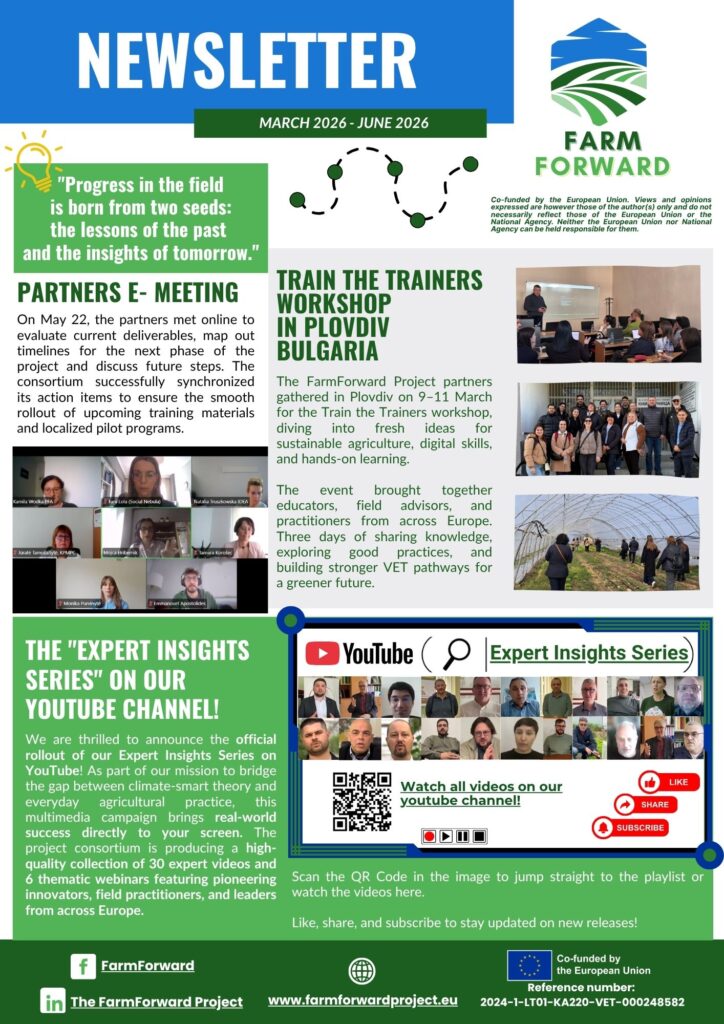
We are proud to share our latest progress in advancing sustainable agriculture, digital skills, and climate-smart practices across Europe!
Our recent efforts focus on three core areas:
International Collaboration
Project partners and field advisors have been actively collaborating through
both in-person workshops and virtual meetings to align timelines,
share best practices, and plan localized pilot programs.
Capacity Building
Through targeted training initiatives, we are equipping educators and practitioners with the tools needed to build stronger, greener vocational pathways for the agricultural sector.
Accessible Knowledge
To bring climate-smart theory directly to the everyday farmer,
we have launched a youtube series campaign featuring
insights, interviews, and webinars from agricultural leaders across Europe.
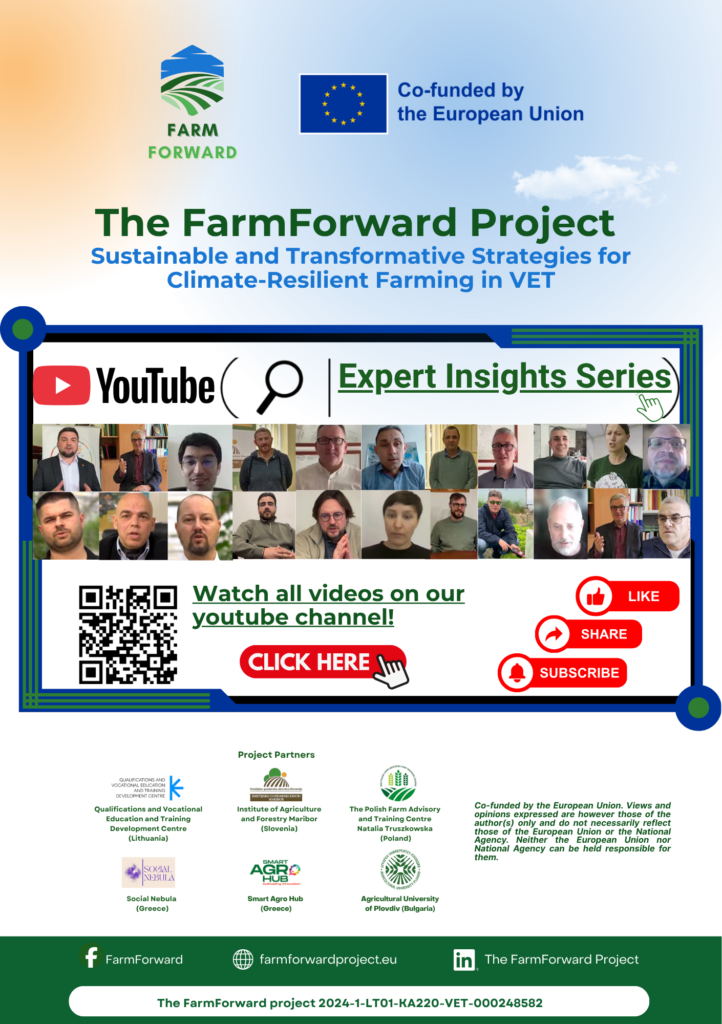
“Expert Insights Series” on YouTube
The Future of Farming is Here!
Climate change is rewriting the rules of agriculture
and the FarmForward Project launched the Expert Insights Series,
your go-to masterclass for climate-resilient farming strategies!
We’ve gathered top agricultural minds
to share actionable, transformative insights!
Or scan the QR code to start watching or
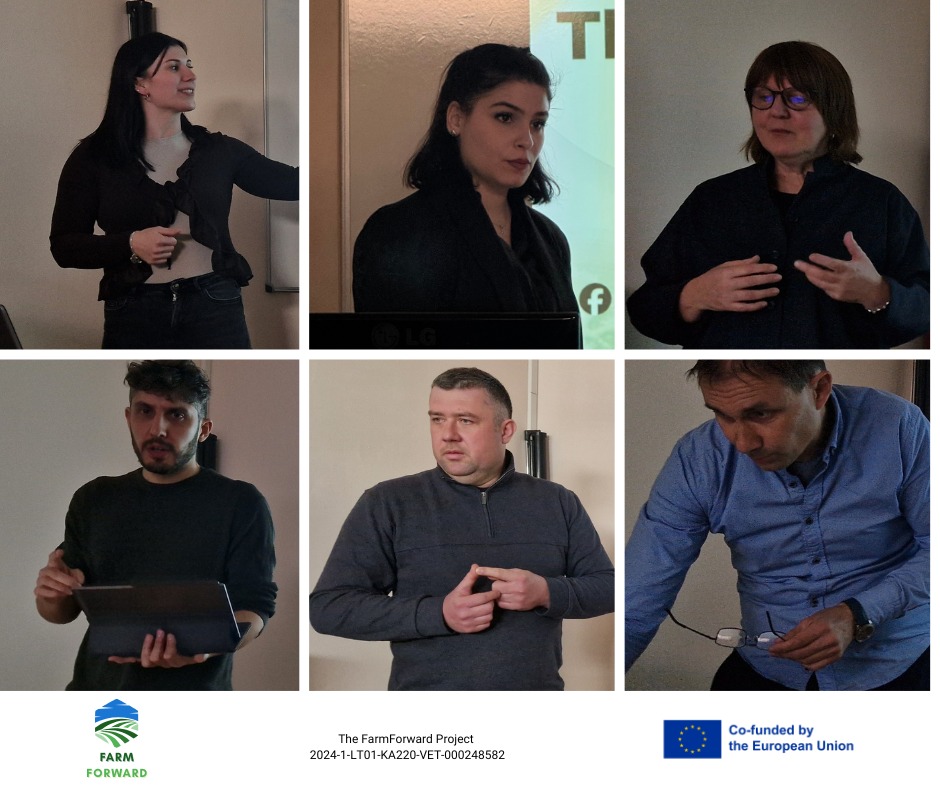
Train the Trainers Workshop
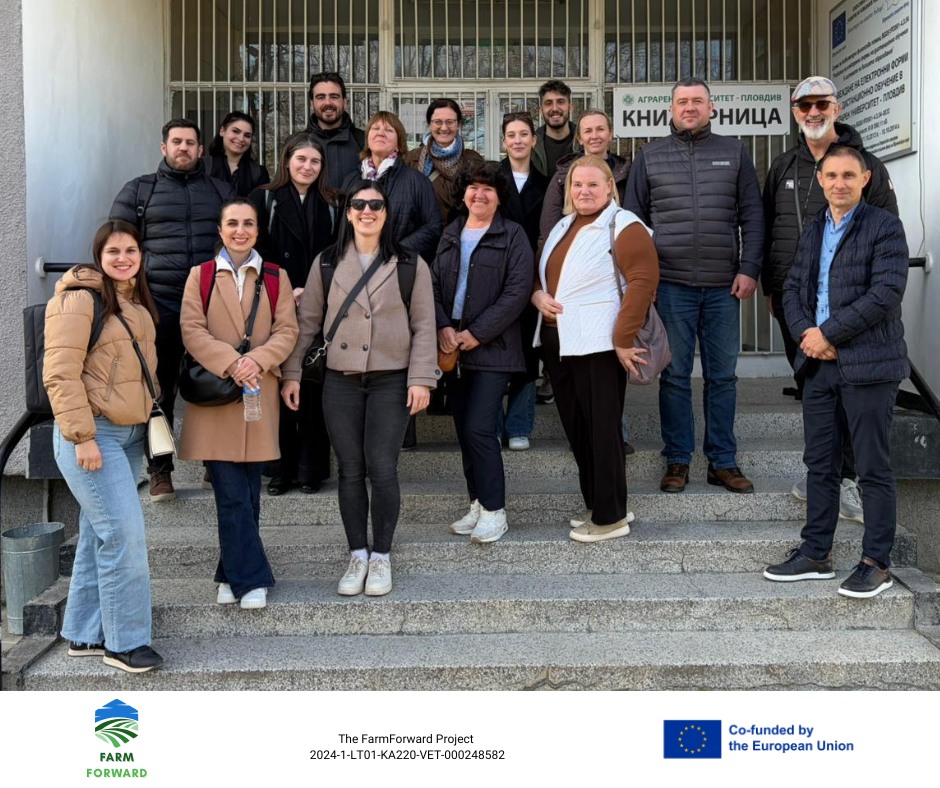
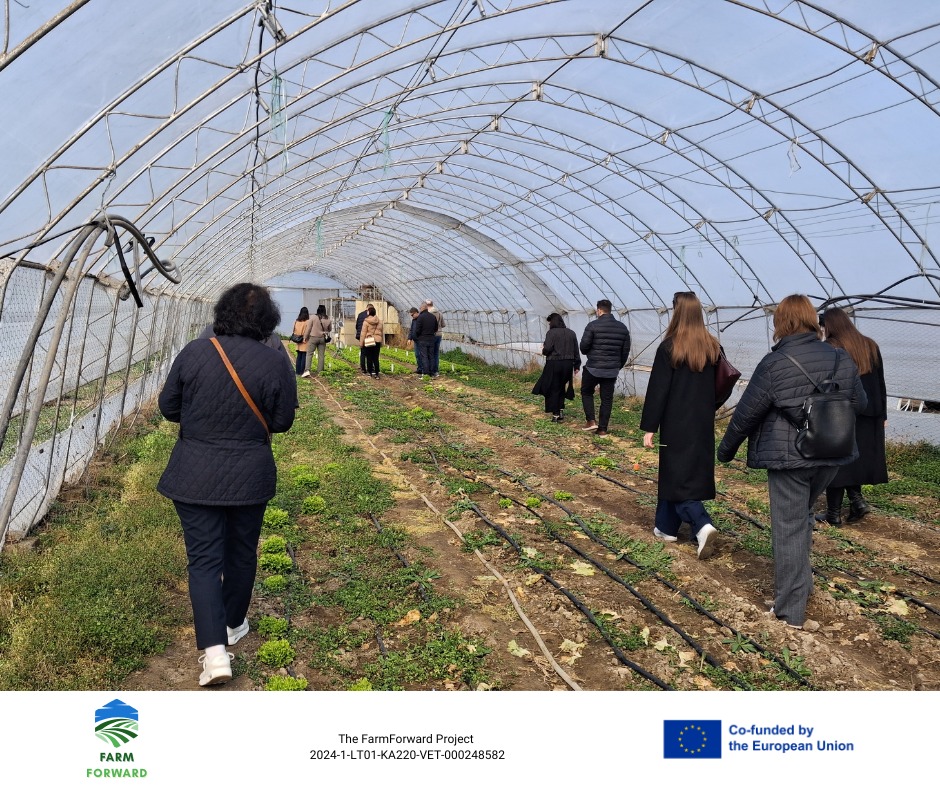
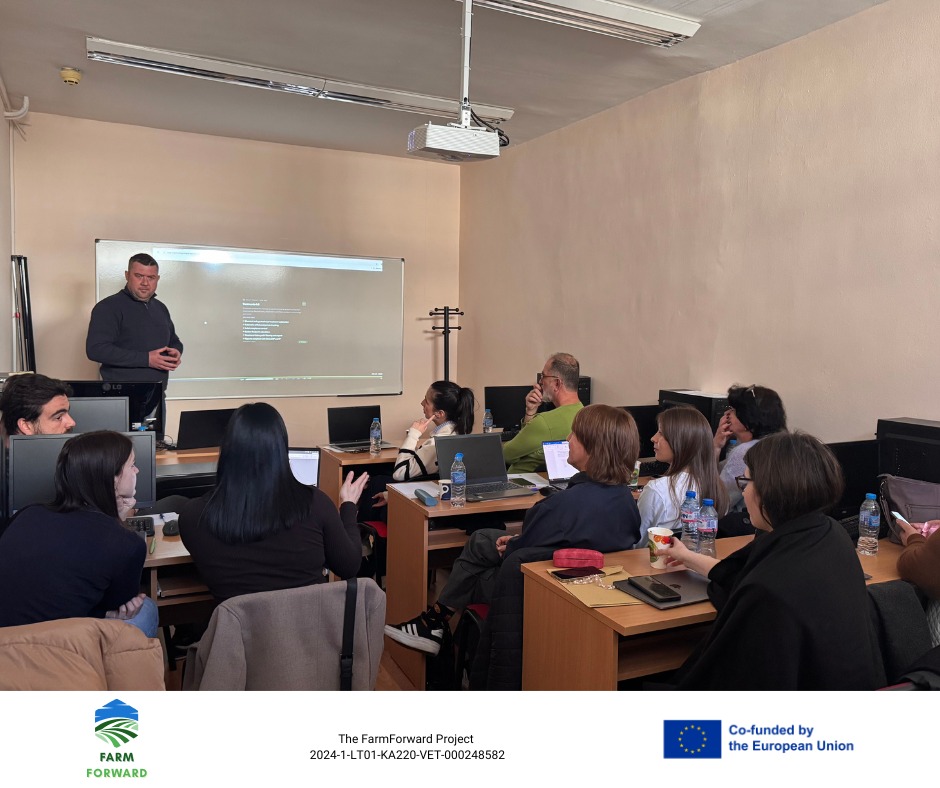
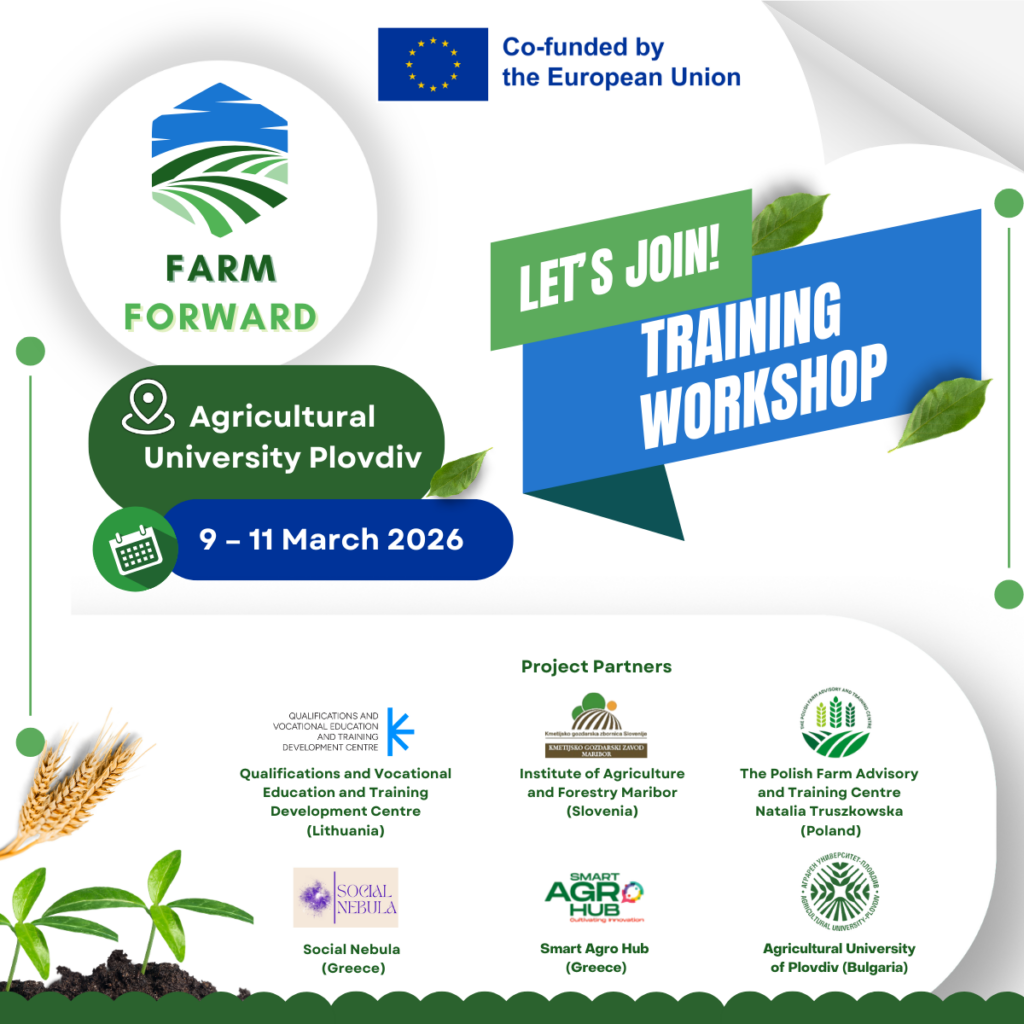
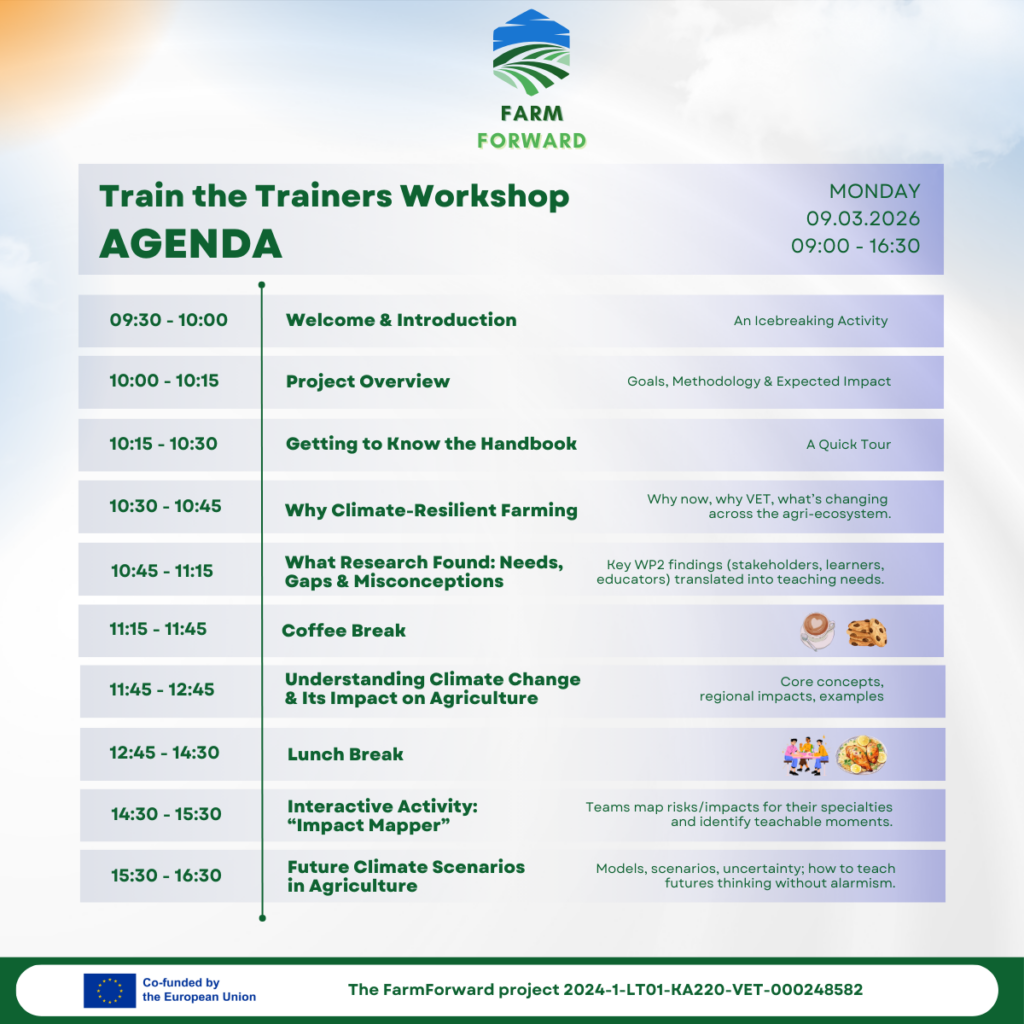
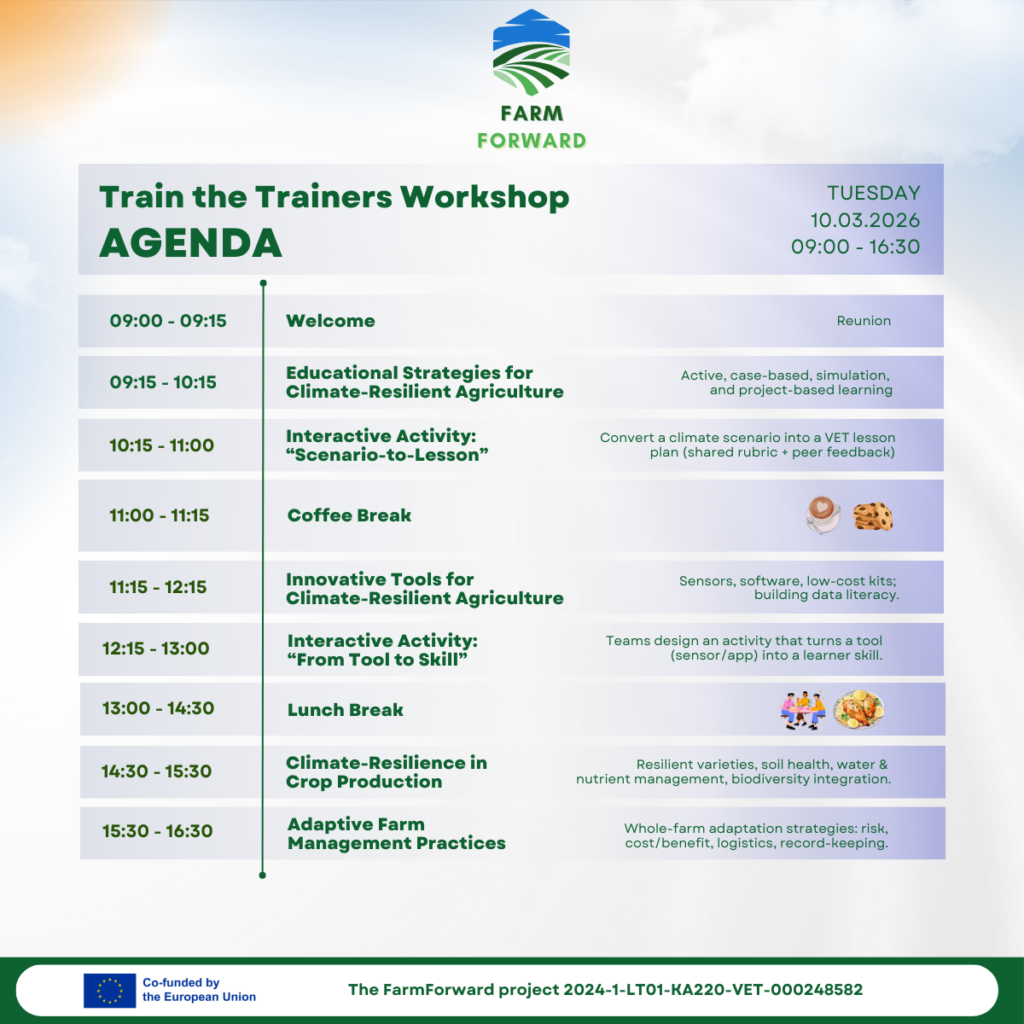
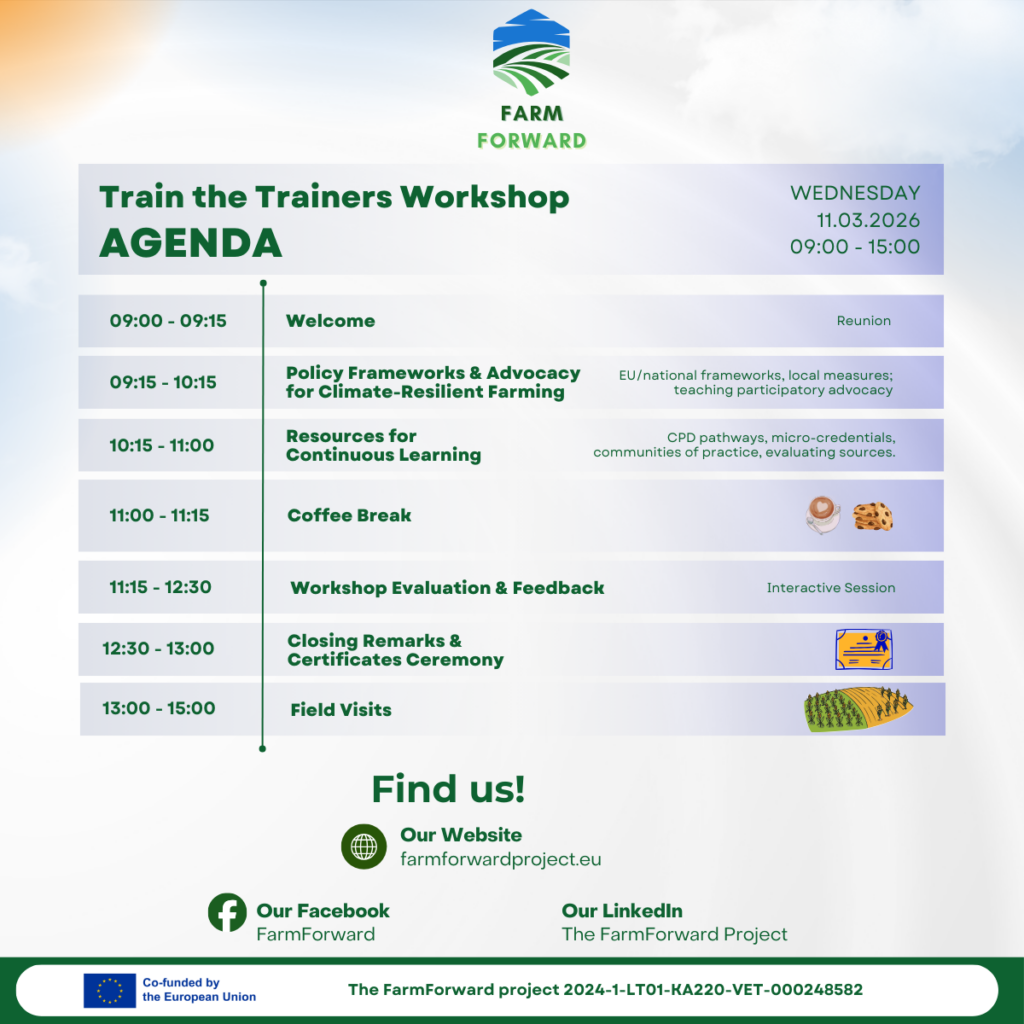
FarmForward Project partners gathered in Plovdiv on 9–11 March
for the Train the Trainers workshop, diving into fresh ideas
for sustainable agriculture, digital skills, and hands‑on learning.
The event brought together
educators, field advisors, and practitioners from across Europe.
Three days of sharing knowledge, exploring good practices,
and building stronger VET pathways for a greener future.
Preparatory Work Underway for Upcoming Project Materials
As the FarmForward project continues to evolve, the consortium has entered an exciting new phase: the preparation of the next wave of project materials.
This stage marks a natural progression from the rich insights gathered
during the research activities of WP2, and it sets the foundation for the practical tools and resources that will soon support farmers, VET providers, and rural communities across Europe.
Over the past weeks, partners have been working closely to translate early findings into meaningful content. This collaborative process brings together diverse expertise from across the consortium, ensuring that every output reflects both the realities of the agricultural sector and the project’s commitment to innovation and sustainability.
The work now underway includes shaping the structure of the materials, aligning them with the project’s pedagogical approach. While still in development, these resources will play a central role in the next steps of FarmForward, supporting training, strengthening digital readiness, and empowering the farming community with practical, future‑oriented tools.
#2 Newsletter
We’re excited to share that our second newsletter is officially out!
From key research findings, to ready-to-be-tested educator training tools
and our upcoming workshop in Bulgaria,
this edition is full of milestones that move us forward together.
Catch up on everything shaping the future of climate‑resilient agriculture!
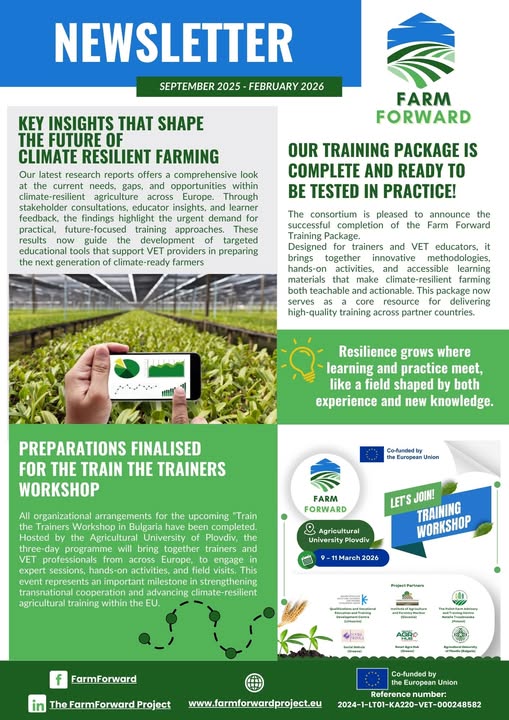
Train the Trainers Workshop
is approaching
The Farm Forward team has finalized the organization of the upcoming Train‑the‑Trainers Workshop in Bulgaria. Hosted by the Agricultural University of Plovdiv, the three‑day event will bring together educators from across Europe for an immersive programme combining expert sessions, interactive activities, and field visits. This workshop marks a key milestone in strengthening VET capacity for climate‑resilient agriculture.
The General Report &
the National Reports are now ready
The Farm Forward consortium has finalised its General and National research reports, providing a robust evidence base on the current state of climate‑resilient agriculture within the VET sector.
The analysis highlights critical skills shortages, training gaps, and sector‑wide misconceptions that limit effective adaptation. These findings directly inform the project’s strategic direction and ensure that all subsequent outputs are aligned with EU priorities and the real needs of agricultural educators, learners, and stakeholders.
#1 Newsletter
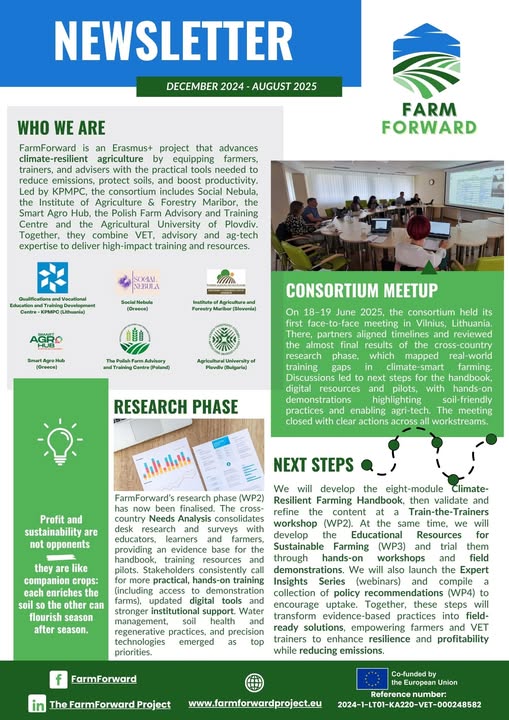
The first FarmForward Newsletter is here!
Discover how our Erasmus+ project is advancing climate-resilient farming
by equipping farmers, trainers, and advisers
with the tools to reduce emissions, protect soils, and boost productivity.
Launch of WP2 Research Phase: Questionnaires Released
The WP2’s research phase is now in full operation: the consortium has finalised its mixed-methods design, and the cross-country questionnaires are currently being administered to vocational education and training (VET) stakeholders and farmers. Preparatory work for the accompanying focus-group discussions is also underway.
As these quantitative and qualitative inputs stream in, the project team is synthesising emerging patterns to inform the forthcoming Needs Analysis Report, which will underpin all the FarmForward project’s training materials and activities. As these quantitative and qualitative data are collected, the project team is synthesising emerging patterns to inform the forthcoming Needs Analysis Report, which will underpin all training materials and activities.
Our kick-off meeting!
On 19 December 2024, all partners met online for the official kick-off meeting, chaired by KPMPC. The meeting was held to agree on the project management and funding plan, as well as the shared responsibility matrix, which outlines each organisation’s roles, deliverables, and reporting timelines.
During the meeting, Social Nebula presented the Green Practices Strategy, and the consortium refined measures for eco-friendly travel, digital pollution reduction and paperless workflows. During a dedicated ‘green session’, Social Nebula presented the Green Practices Strategy, and the consortium finalised measures for eco-friendly travel, reducing digital pollution and implementing paperless workflows.
The meeting also finalised protocols for daily collaboration via Google Drive and set the schedule for the mixed-methods rollout of WP2, ensuring clarity, accountability, and a sustainable start to the research phase.